

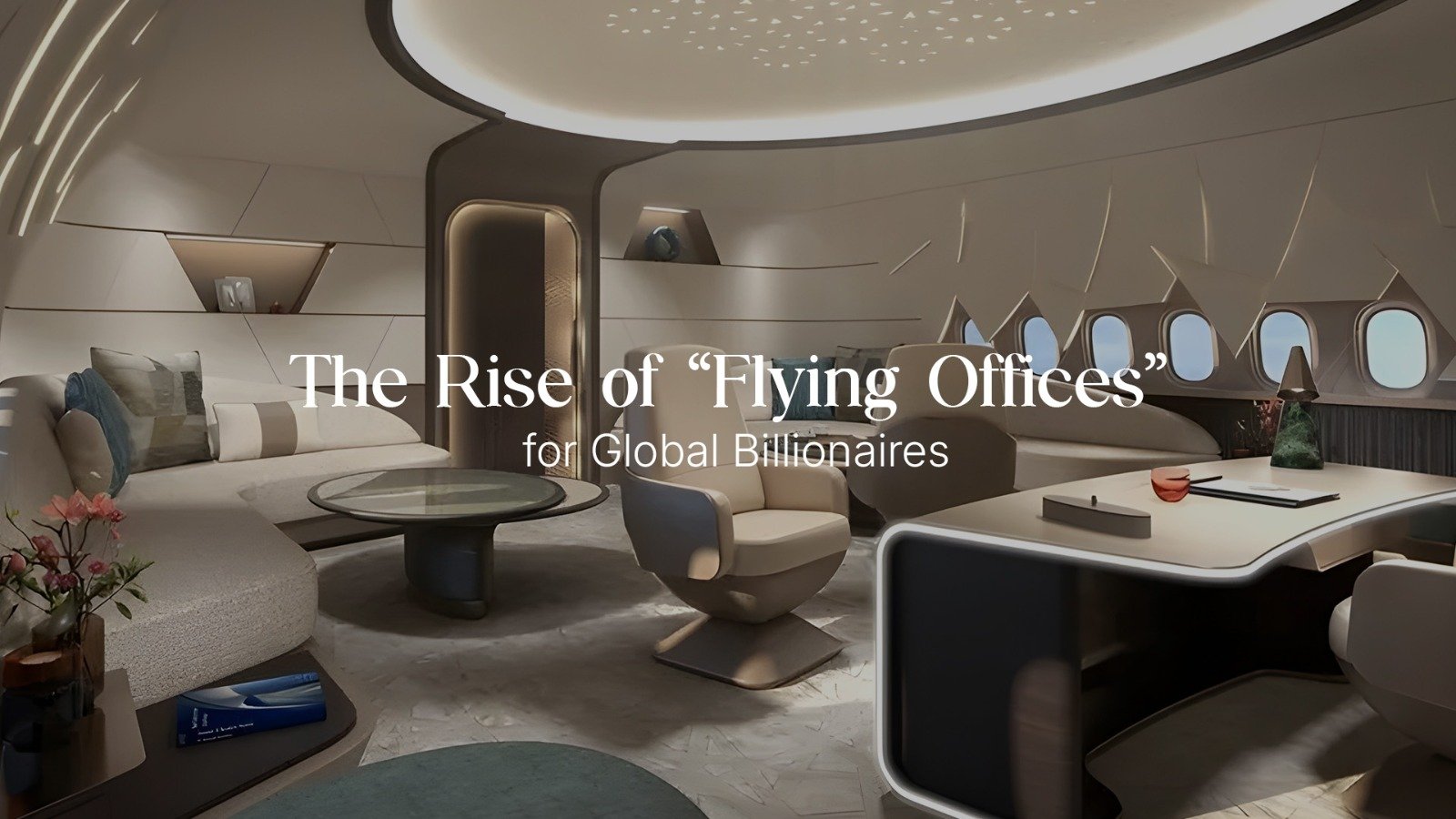
“Flying Offices” are private jets configured as mobile workspaces that let billionaires turn cruise altitude into a boardroom, sustained by enterprise-grade inflight connectivity and personalized cabin design for productivity and privacy. As remote work is becoming popular even among the affluent elites, “Flying Offices” are emerging as a groundbreaking trend in business travel. This shows the rise of remote work culture and the passion of the elites to stay productive even while travelling.
With low-latency satellite links and multi-zone cabins, these jets are the means for continuance of workflows beyond time zones and oceans, thus extending productivity. The new luxury that comes about as a result is not simply speed and privacy but also uninterrupted, high-fidelity work from any place on Earth. These private jets make the aircraft more than just a means of travel, they are corporate offices in the sky where everything from collaboration to secure video conferences happen. You feel just as comfortable and productive on the jet as you do in the company headquarters.
Historical context
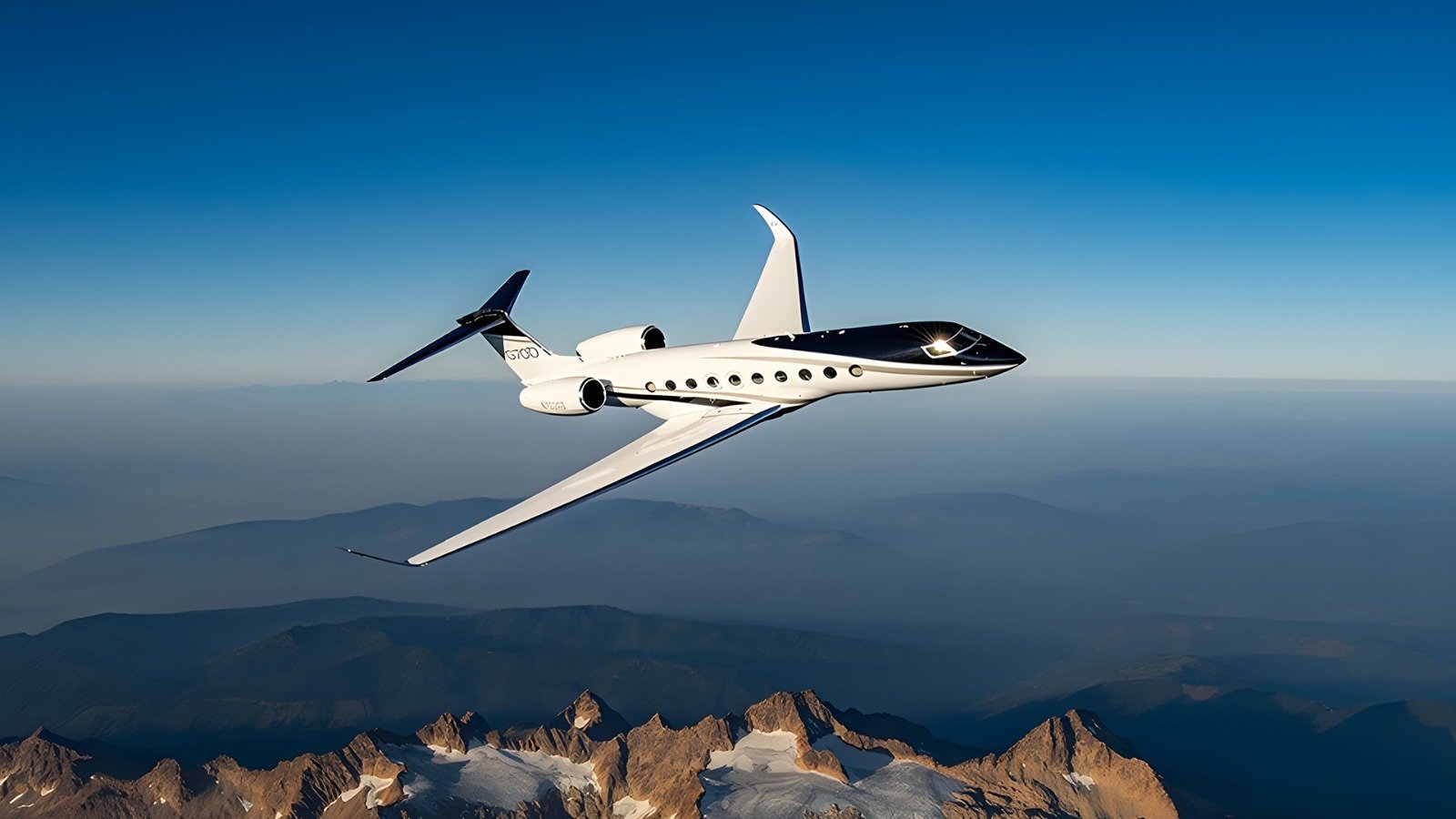
Private jet travel has long been regarded as the pinnacle of status and wealth, an emblem of the utmost luxury afforded only by the elite. In the early days, private jets were primarily employed for luxurious travel rather than as work tools. However, as time went by, the purpose of these jets changed. Business aviation gained momentum toward the end of the century as the number of billionaires, which increased by 50 percent in just ten years, continued to rise.
The COVID-19 pandemic was a turning point. The health concerns and travel restrictions led to an unprecedented surge in demand for private flights, even among the frugal wealthy. As remote work became the norm, constantly traveling and busy top executives and entrepreneurs needed to be seamlessly always connected. The need to always be available for immediate decisions and the desire for privacy and comfort pushed billionaires to redesign these planes into flying offices that mirrored their ground-based offices.
Technological Advancements
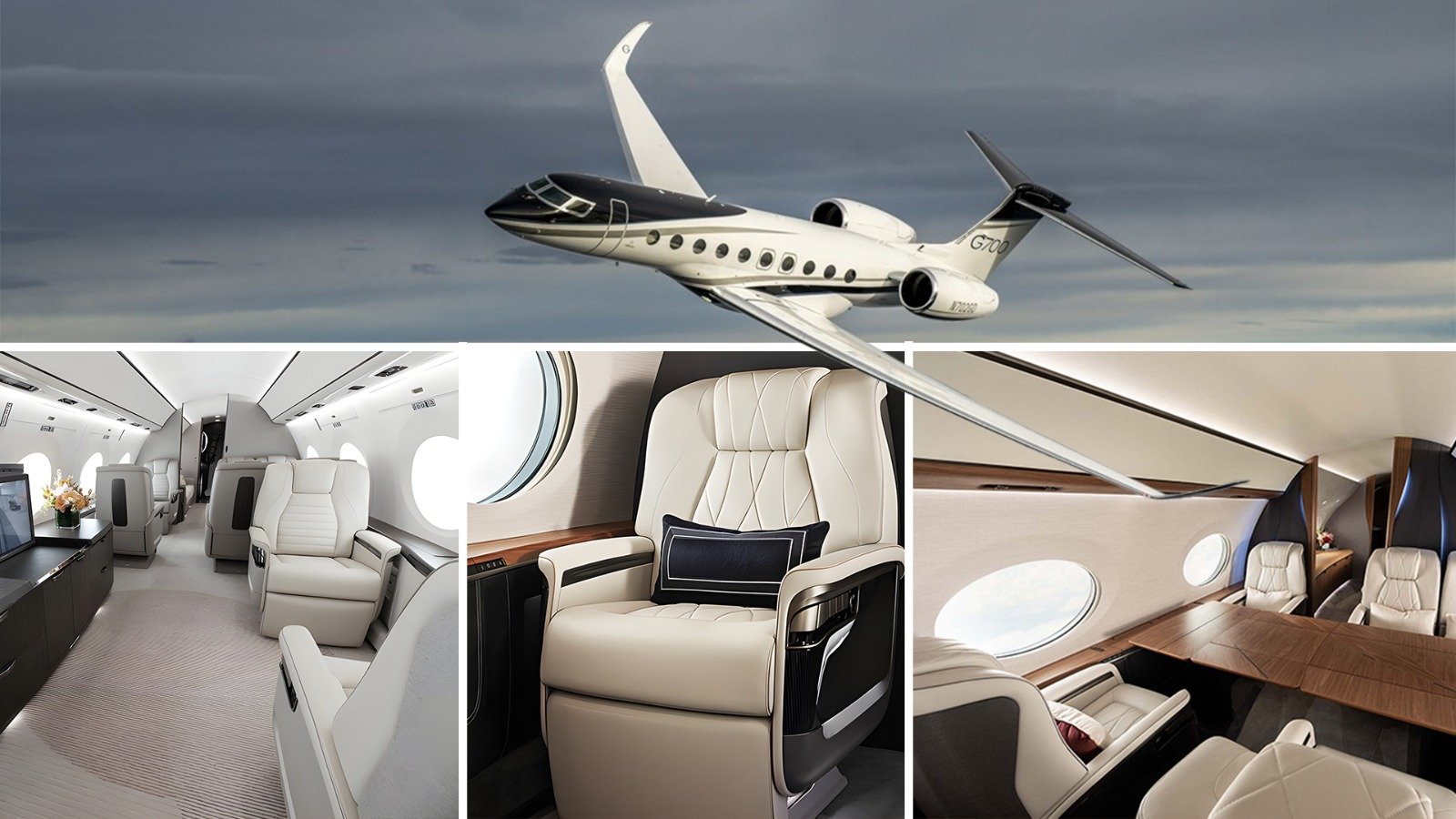
What truly makes “Flying Offices” stand out is the possibility of high-level productivity due to technological advancements. Today’s most sought-after jets, like the Bombardier Global 7500 and Gulfstream G700, are equipped with high-speed internet provided by low-earth-orbit satellites. This ensures seamless video calls, cloud-based collaboration, and even real-time editing. Ergonomic chairs, adjustable tables, and soundproof pods enable executives to work for hours as comfortably as they would in any office on Earth.
For instance, Gulfstream’s Symmetry Flight Deck system offers revolutionary touch-screen controls, while advanced cabin management systems enable personalization of the jet environment at the touch of a button. Aircraft such as the Boeing Business Jet 787 Dreamliner and the Airbus Corporate Jet 320neo can be configured into zones, offering separate spaces for work, rest and dining. This means that you do not have to choose between business and comfort.
Work-Life Balance

As “Flying Offices” become a more prominent part of their lives, they inevitably influence the work-life balance of these billionaires. On one hand, the elegance and convenience of airborne living spaces are obvious. The time saved is incredible. They cut the distance between workplace and leisure to almost nothing and eliminate completely all the “dead” transit time. However, this seamless integration has a downside, the lines between work, travel, and personal time blur, leading to potential burnout.
The need to stay plugged in always can also affect quality of rest—no matter how high one flies. Some billionaires are virtually always on call, never truly able to unplug from their digital duties.
Conclusion
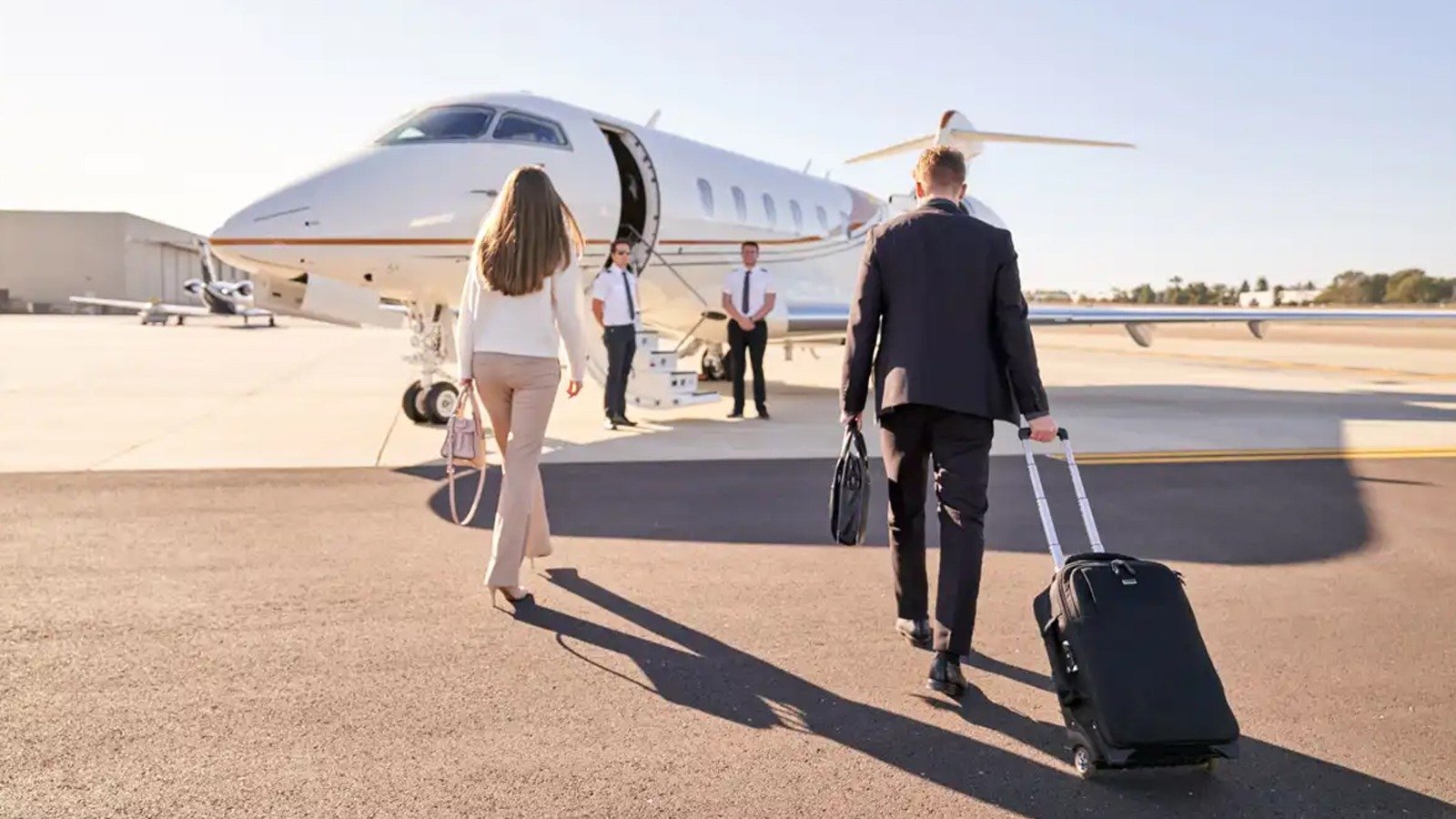
Flying Offices crystallize a distinct future of work at the very top: aircraft that function as secure, sovereign campuses where strategy is set, capital is moved, and teams align in real time above the cloud line. With maturing satellite constellations and ever‑smarter cabins, expect richer collaboration tools, better latency, and more health‑centric design that treats time zones as variables rather than limits. The societal counterweight will be sustainability: as scrutiny intensifies, breakthroughs in operations, fuels, and eventually propulsion will define which fleets earn their social license to keep the airborne office aloft. In the meantime, the sky has become a corner office—luxury measured not just in leather and range, but in uninterrupted attention and the quiet privilege of time reclaimed.